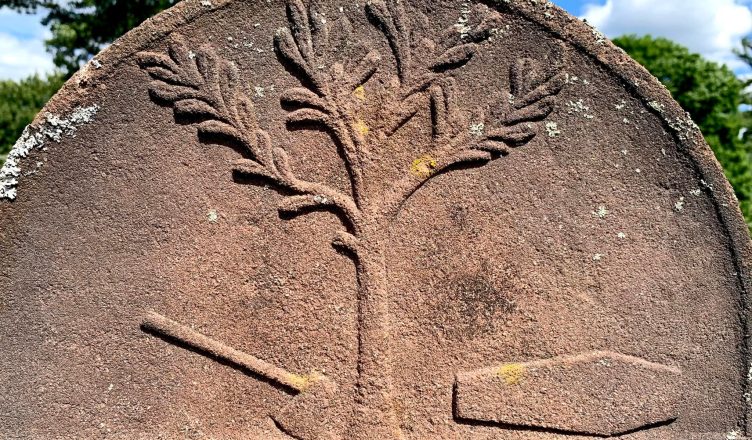
The gravestone’s stories in this section—literal and allegorical—capture forces beyond human control. A tree falling, a raging storm, a flood, a lightning strike and more.
A Broken Branch, a Coffin and an Axe
Amos Pelton, born on April 21, 1779, tragically passed away on October 10, 1796, at the young age of eighteen. He was the son of Abner and Sarah Bidwell Pelton and is buried in the Old Portland Burying Ground in Middlesex County, Connecticut. His death was caused by the fall of a tree, as imaginatively depicted, with the broken branch, axe and coffin.[i]
[i] Amos Pelton Genealogy, Ancestry.Com, L J AUSTIN GRETTY FAMILY TREE, 10 March 2026.
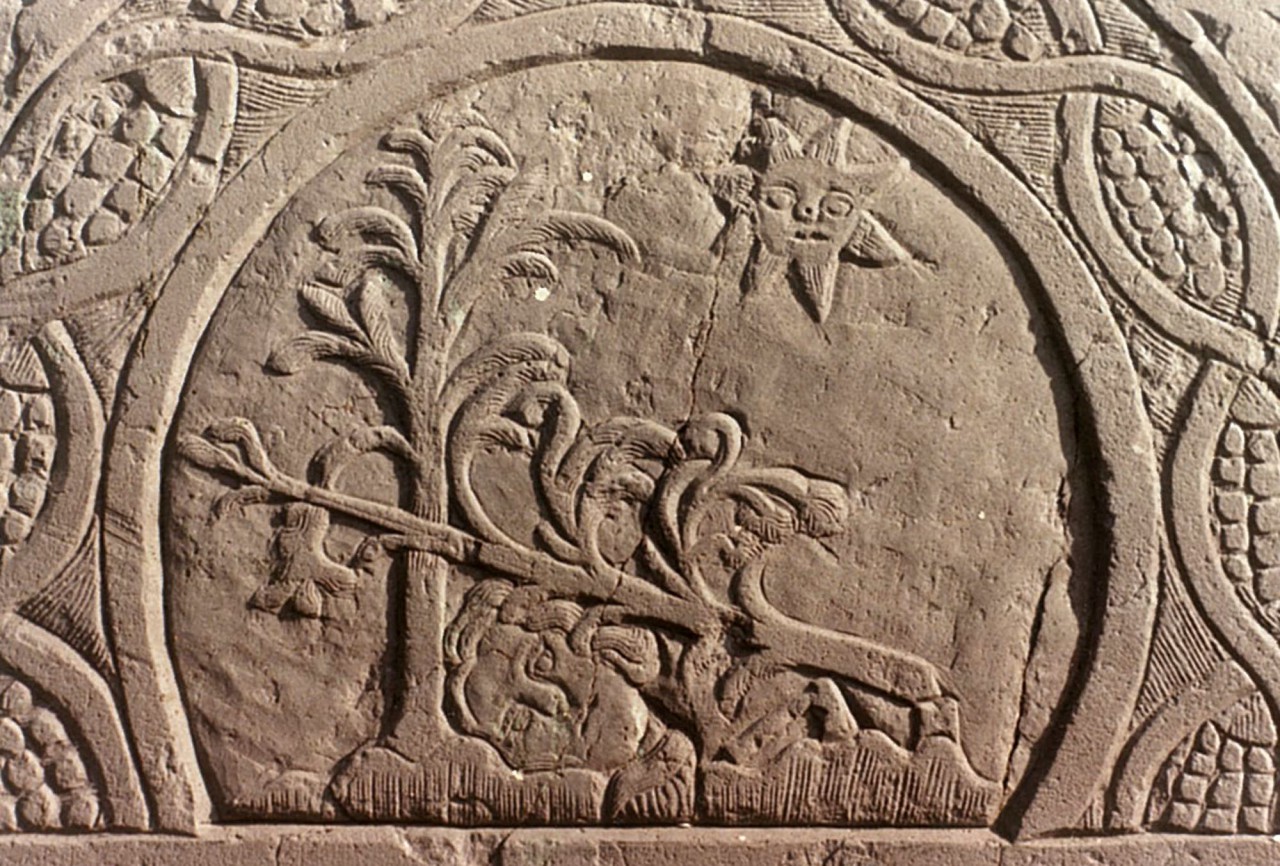
The Fall of aTree
Twenty-Six-year-old John Stockbridge’s gravestone was creatively carved by John New of Wrentham, Massachusetts and is depicted with an axe in his hand as he died “by the fall of a tree”. The inscription reads that his death “was Sudden, premature, awful & violent; providentially occasion’d by the Fall of a Tree.”
His death was reported in the Boston Chronicle: “On Wednesday last, Mr. John Stockbridge, of Pembroke, son of Col. Stockbridge, of Hanover, was unfortunately killed by the falling of a tree. The young gentleman’s death is much lamented.” The Chronicle later corrected John’s father as David Stockbridge, esq.[i],[ii]
[i] Boston Chronicle, Feb 1768, 15-22.
[ii] Vincent F. Luti, “New Family Carvers,” Markers XVI (1999), 47.
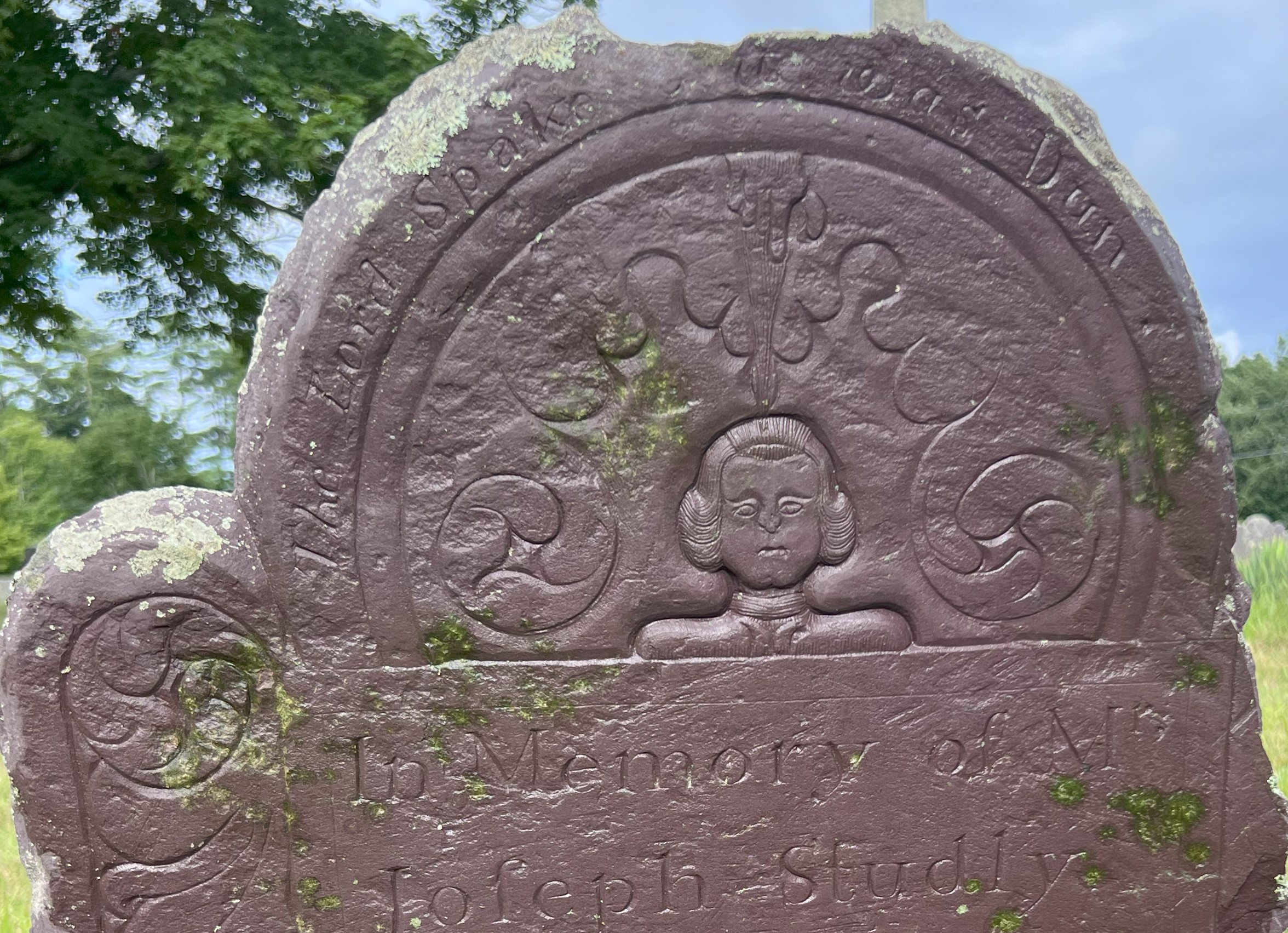
The Lord Spake and it was Dun
Joseph Studly was killed by a lightning strike: “We hear from Hanover the on the 16th, Ult (July 1766) as Mr. Studly and his Son were returning from his Wood Lot with a Cart Load of Wood, a Thunder Storm came on, And his Son taking a Tree for Shelter was instantly struck dead by a Flash of Lightning. Studly’s manner of death is depicted with the hand of God throwing a lightning bolt at Studly’s head. [i]
(Tympanum) adapted from Psalm 44.9 “For He Spake, and it was done”
Memory of Mr.
Joseph Studly
who Died by Light-
ning June 16th, 1766
25 Years & 3 Months
Old
[i] The Mass Gazette & Bost
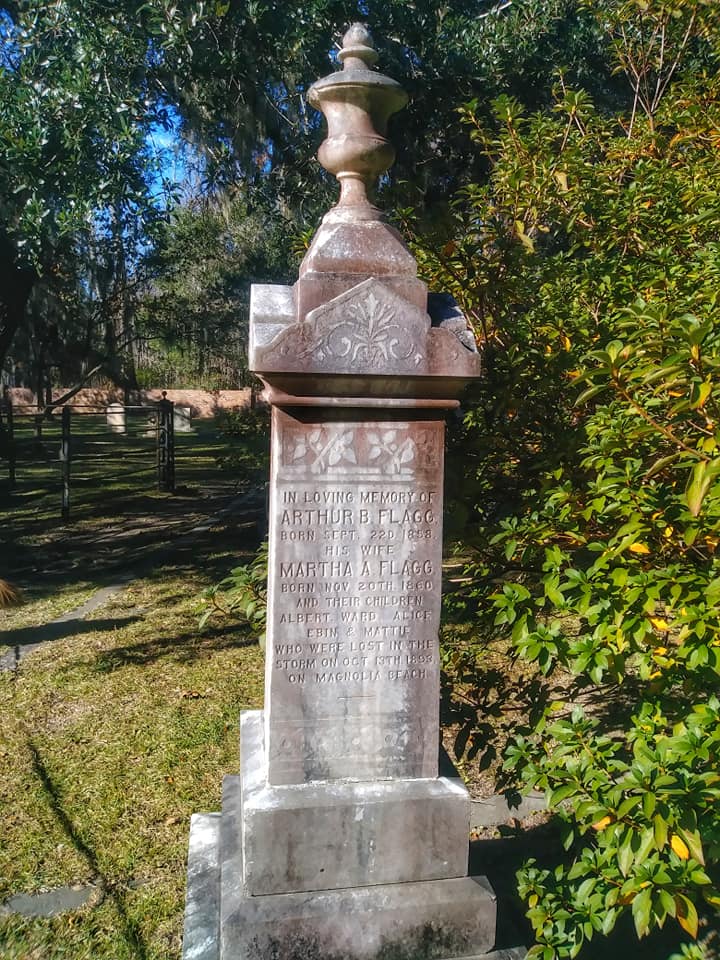
All Saints Episcopal Church Cemetery
Pawleys Island, Georgetown County, South Carolina
The Flagg Flood
he Flagg family (Arthur, Martha, and their children Albert, Ward, Alice, Ebin and Mattie) was one of many families who lost members during an 1893 hurricane that demolished their vacation home on South Carolina’s coast. On Friday the Thirteenth of October 1893 the storm generated waves as high as the treetops which later became known as “The Flagg Flood.” The devastation to the summer homes of many Flagg family members occurred on Magnolia Beach (now Huntington Beach) South Carolina. Grandparents Arthur and Georgiana Flagg as well as Martha’s sisters Elizabeth and Alice LaBruce also perished in the storm. [i]
[i] Charlotte Kaminski Prevost and Effie Leland Wilder, Pawley’s Island… A Living Legend, (University of Virginia: 1972.)
Old Burying Ground
Deerfield, Franklin County, Massachusetts, USA
Mother and Child
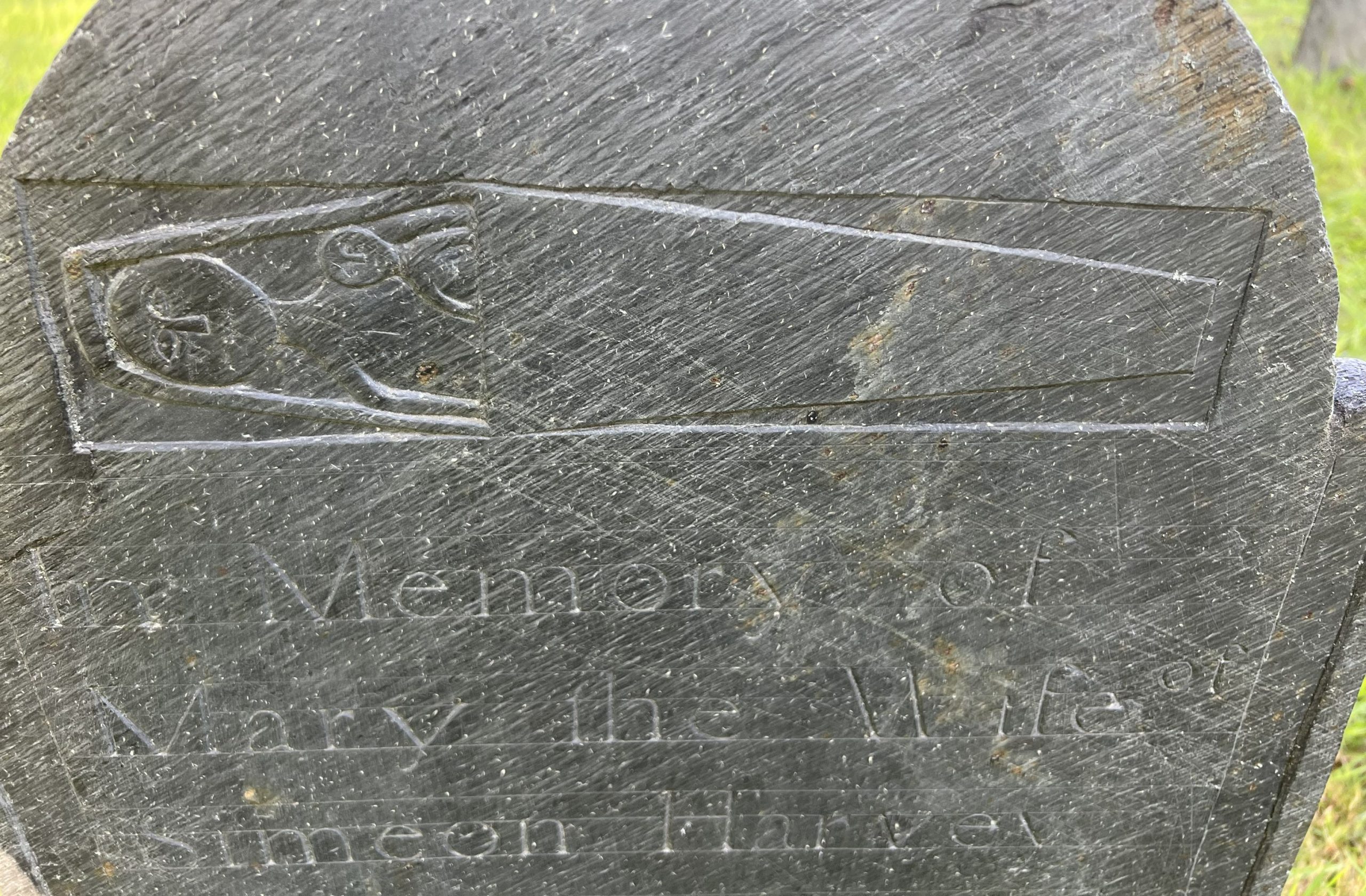
Mary Arms Harvey passed away in December 1785 at the age of 38, during childbirth, along with her stillborn child. This tragedy left her husband, Simeon Harvey, to care for their nine children, ranging in age from two to sixteen. Solomon Ashley, a skilled gravestone carver and neighbor, created a touching memorial for Mary and her infant. The gravestone features an image of a mother cradling her child in her left arm, both depicted in an open coffin.[i]
In Memory of
Mary the Wife of
Simeon Harvey
Who Departed this
Life December 20th
1785. In 39th year of
Her age on her left
Arm lieth the Infant
Which was still born
[i] Heather Harrington, The Life and Death of Mary Arms Harvey, Historic Deerfield, November 13, 2020, https
Death’s Prisoner
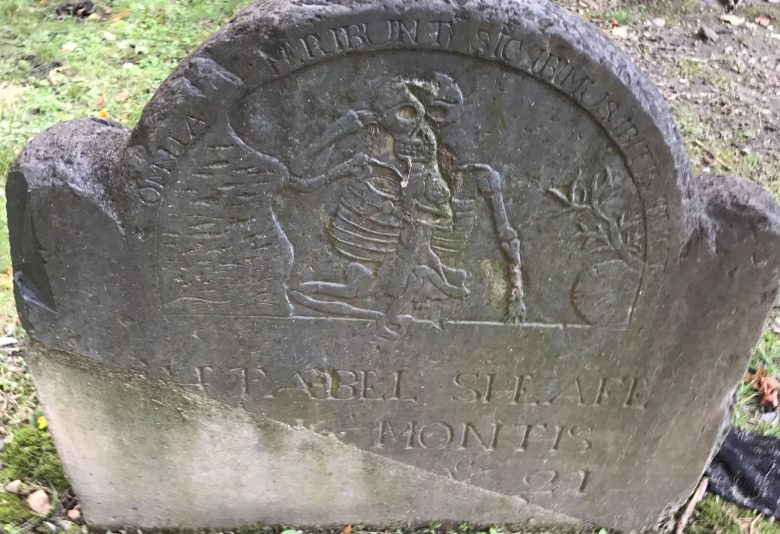
Mehetabel Sheafe’s gravestone in King’s Chapel Burying Ground in Boston, Massachusetts depicts what appears to be a mother skeleton with a baby skeleton inside. Crude, but perhaps a way to show that the woman had died in childbirth? Not at all — it is borrowed from Emblems And Hieroglyphics of the Life of Man, Modernized and is titled Man is Death’s Prisoner; by Francis Quarles. The image is of a fully fleshed man inside a skeleton, which represents death. Quarles’s image alludes to man’s (Adam’s) first sin.
Time’s Up
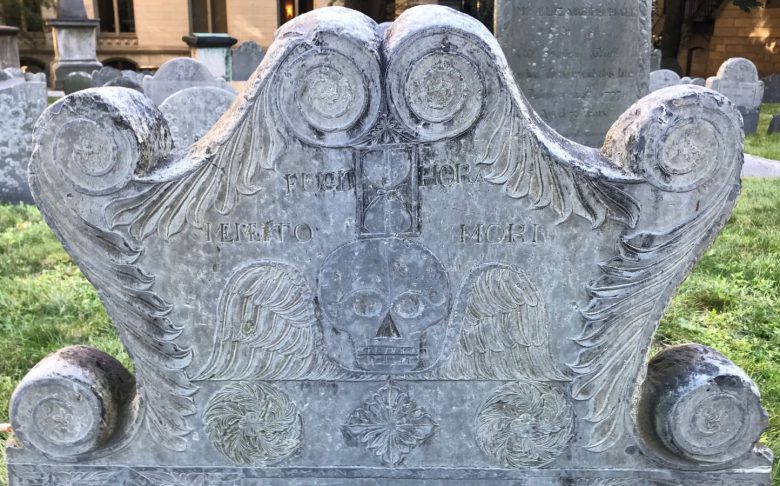
One of the first and most famous gravestones, visible upon entering King’s Chapel Burying ground, is that of Joseph Tapping (d. 1678). The marker is famed as a work of art conceived by the unnamed carver known as “the Charlestown Stonecutter.” The stone is one of the most elaborate in the burying ground with beautifully carved symbolic images: the skull with wings represents the soul leaving the body, the hourglass represents time running out, the skeleton snuffing out the candle is Death ending life, and the bearded figure is Time attempting to stop Death. The stone’s Latin inscriptions refer to the quick passage of time and awareness of death’s inevitability. Little is known of Tapping, a Boston shopkeeper who died at the age of 23, leaving his young wife Marianna a widow.[i]
[i] Find A Grave, King’s Chapel Burial Ground Sign, https://www.findagrave.com/cemetery/91147/king’s-chapel-burying-grou
Dorchester North Burying Ground
Dorchester, Massachusetts
Ingenious Mathematician
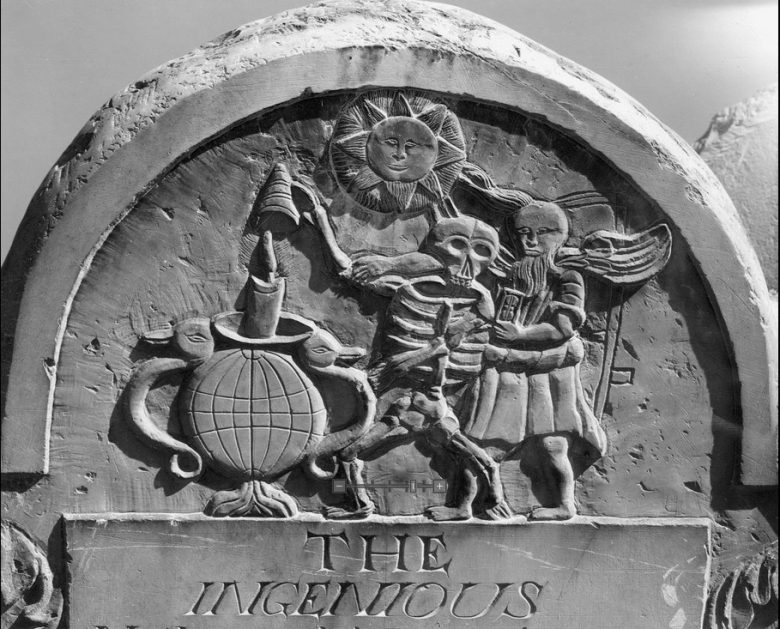
John Foster, who graduated from Harvard around 1667, was known as “The Ingenious Mathematician and Printer.” John Foster was the earliest engraver in what is now the United States. He operated the first successful printing press and printed the first book in Boston in 1675. His fascination with stars and physics was the inspiration for the sun in the tympanum of his gravestone. After a long illness, Foster died of tuberculosis at the age of 32/33. According to Harriett Forbes in Gravestones of Early New England, Foster’s foot stone was inscribed with the Latin verse “Ars illi sua census erat” which is translated beneath the quote as “Skill was his cash.” [i],[ii]
[i] Samuel Abbott Green, John Foster The earliest American Engraver and the First Boston Printer, (Boston: Massachusetts Historical Society, 1909).
[ii] Harriette M. Forbes, Gravestones of Early New England (And the Men Who Made Them) 1653-1800, (New York: Da Capo Press, 1967), 113.
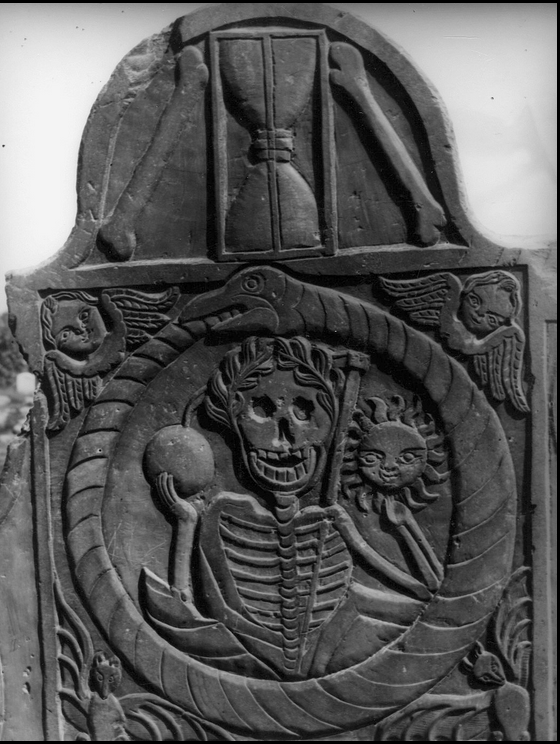
The Mortal Part
Mrs. Jayne is buried atop Old Burial Hill, one of the oldest and most picturesque cemeteries in New England. Her ornate headstone, overladen with symbolism, overlooks the Atlantic Ocean and the historic section of Marblehead, Massachusetts prosperous colonial-era fishing village. Her tombstone, next to where the old meeting house or church once stood, was a grim reminder to the congregation to expect and prepare for death. The tombstone’s symbolism clearly reflected the prevailing cultural beliefs about mortality in colonial times.
The circling snake (ouroboros) with its tail in its mouth is a symbol for eternity. The skeleton, with a laurel victory crown, holds the sun and the moon — now a popular tattoo motif. The hourglass flanked by bones symbolizes death moving in when time ran out and the scythe behind and through the skeleton harkened the grim reaper. The cherubs represent heaven and the bats represent the underworld, or some say evil. Mrs. Jayne’s headstone was carved by the talented master stonecutter Henry Christian Geyer. [i],[ii]
Jayne’s epitaph is as follows:
Deposited
Beneath this Stone the Mortal Part
of Mrs. Susanna Jayne, the amiable Wife of
Mr. Peter Jayne, who lived Beloved
and Died Universally Lamented, on
August 8th 1776 in the 45th
Year of her Age.
“Precious in the Sight of the Lord is the Death of his Saints.”
Here Sleeps the precious Dust — She Shines above,
Whose Form was harmony, whose soul was Love.
What were her Virtues? all that Heaven could Spare
What were her Graces? all Divinity Fair.
Mingling with Angels, they admire a Guest,
As spotless Good, and lovely as the Rest.
[i]Allan I. Ludwig, Graven Images, New England Stone Carving and its Symbols, (Middletown: Wesleyan University Press, 1966), 77, 82,89, 187, 261.
[ii] The Grave of Susanna Jayne: Bats, Angles and the Grim Reaper, New England Folklore, March 22, 2022, https://newenglandfolklore.blogspot.com/2022/03/the-grave-of-susanna-jayne-bats-angels.html
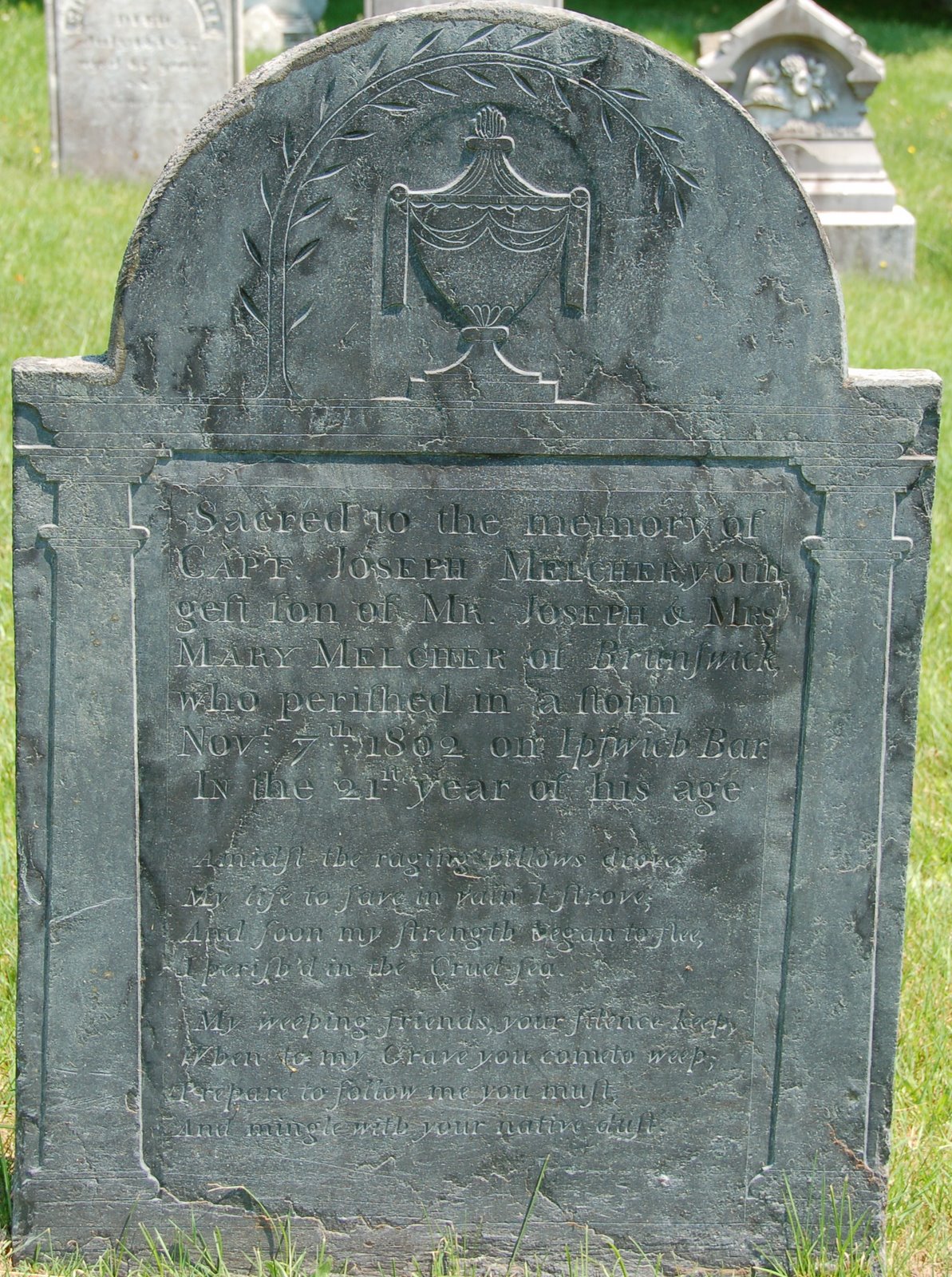
The Raging Sea
The epitaph for Captain Joseph Melcher paints a harrowing picture of his final moments in a raging storm at sea. The last two sentences of his epitaph are a reminder to visitors to reflect on their own mortality—Prepare to follow me you must!
Sacred to the memory of
CAPT. JOSEPH MELCHER youngest son of MR. JOSEPH & MRS MARY MELCHER of Brunswick
who perished in a storm Nov. 7th 1802 on Ipswich Bar In the 21st year of his age.
Amidst the raging billows drove,
My life to save in vain I strove;
And soon my strength began to flee,
I perish’d in the Cruel sea.
My weeping friends, your silence keep,
When to my Grave you come to weep;
Prepare to follow me you must
And mingle with your native dust.