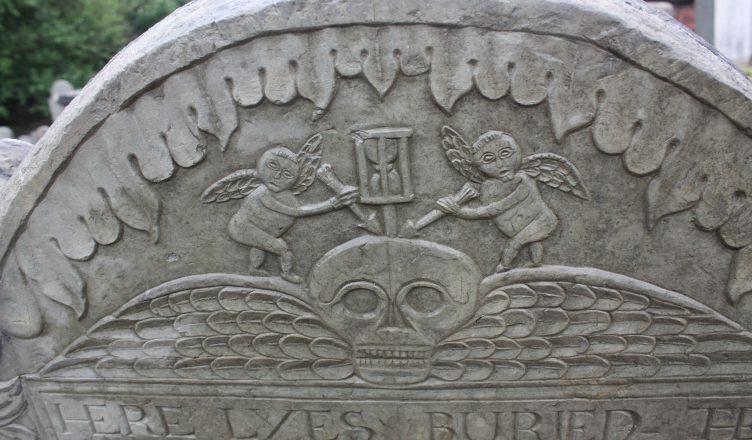
New England, and in particular the Boston area, boasted some of the finest gravestone carvers of the era and to this day. Seventeenth century stones included the ubiquitous death’s head, imps, dagons or merfolk, skeletons, flying hourglasses as well as some unique perspectives on mortuary art.
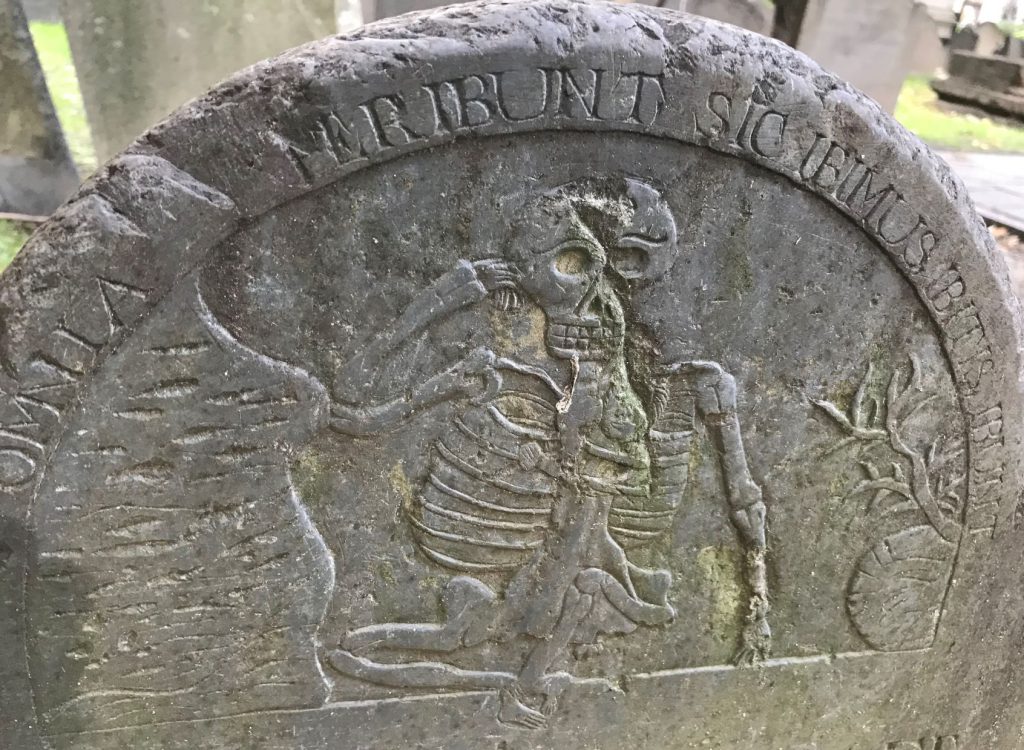
The Stonecutter of Boston was also known as the Charlestown Stone Cutter. His name is unknown; however, it has been suggested that he may be Elias Grice buried in the Granary Burying Ground of Boston, Massachusetts.
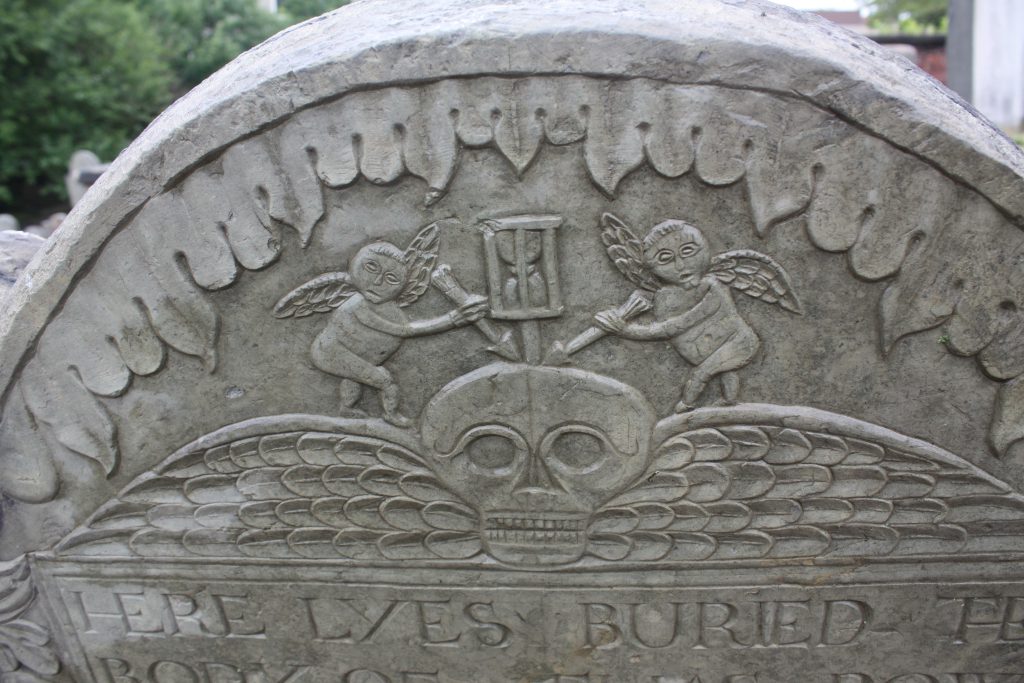
Joseph, Nathaniel and Caleb Lamson
Joseph Lamson’s work started around 1677 and continued with his sons Nathaniel and Caleb about 1722-1767. While Joseph did not sign his work, Nathaniel and Caleb did, using their initials.
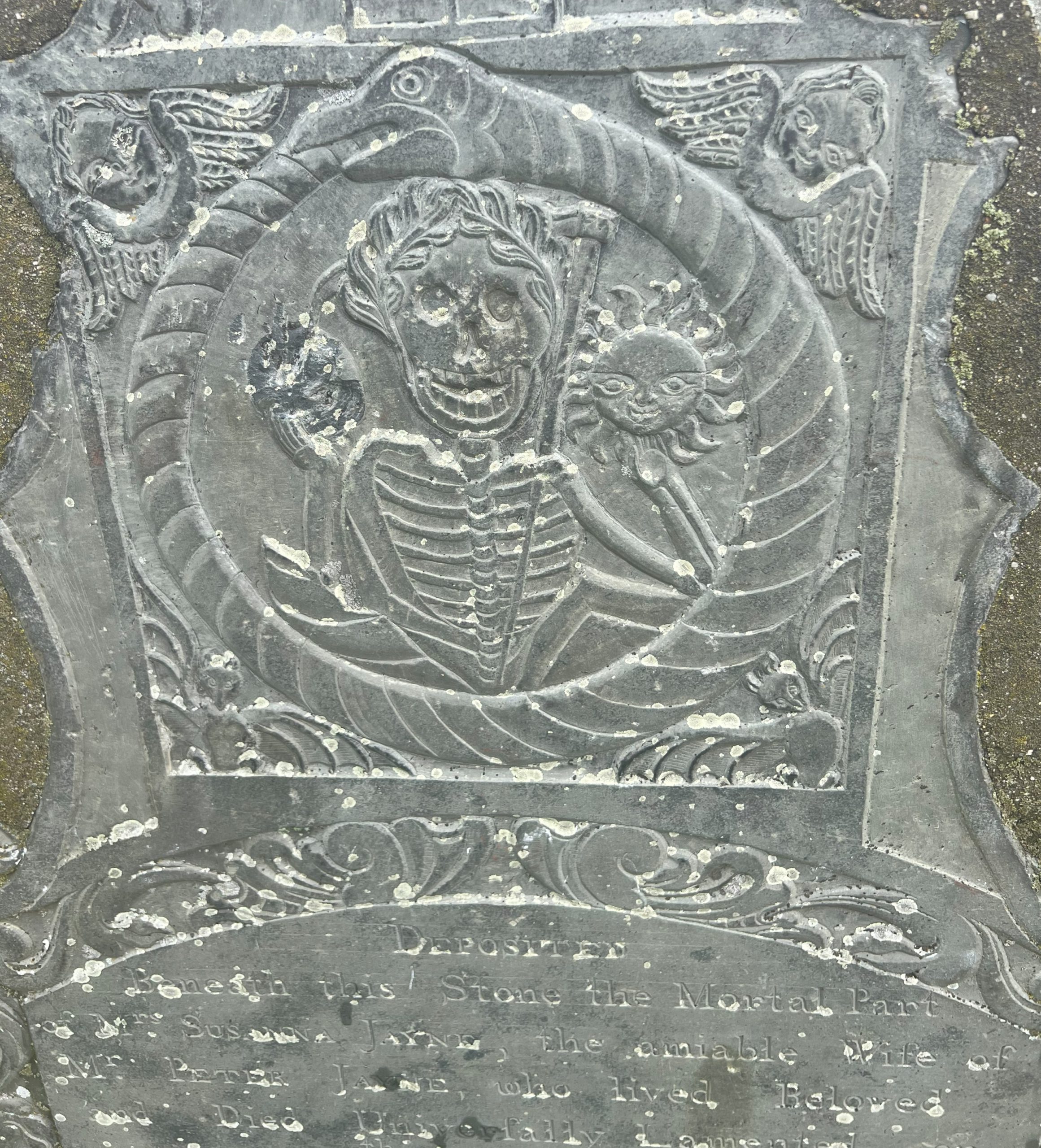
Henry Christian Geyer (1727-1785) advertised in the Boston Globe in 1770 that he was a “Stone Cutter near Liberty-Tree South-End Boston”. His intricately carved stones can be found in the Boston area as early as 1761. When Henry died in 1785, his son John Just Geyer, continued the business with a similar style.
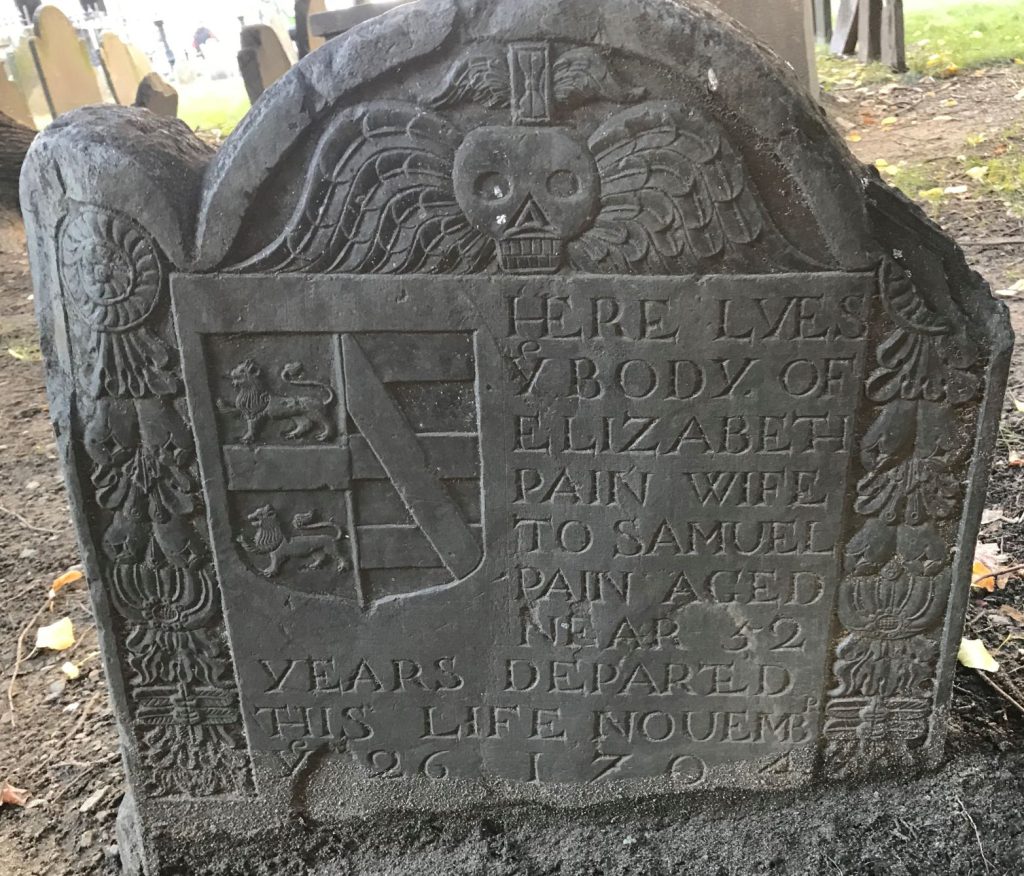
Mumford’s death’s head as described by Harriette Forbes, Volume 15-16 page 147, as a round head, large round eyes with no eyebrows, teeth that meet squarely, and a triangular nose with only one inner line. Mumford’s stone frequently have borders at the sides, pomegranates and figs.
James Allen, West Tisbury, Martha’s Vineyard, Massachusetts.
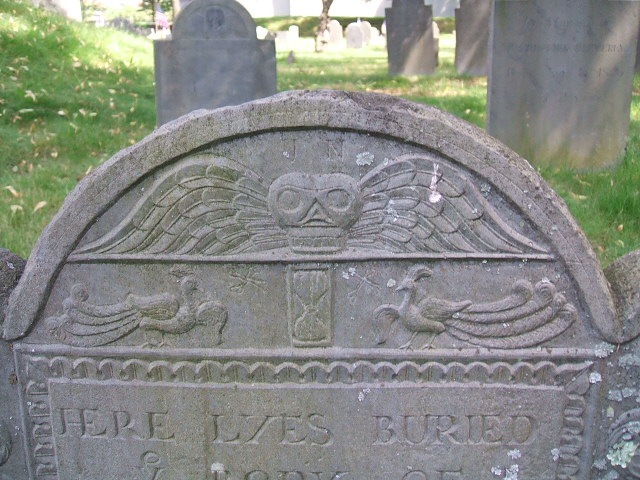
The mysterious JN carved stones in the Boston area in the late seventeenth century. His original designs included mermaids or “dagons” as well as peacocks.
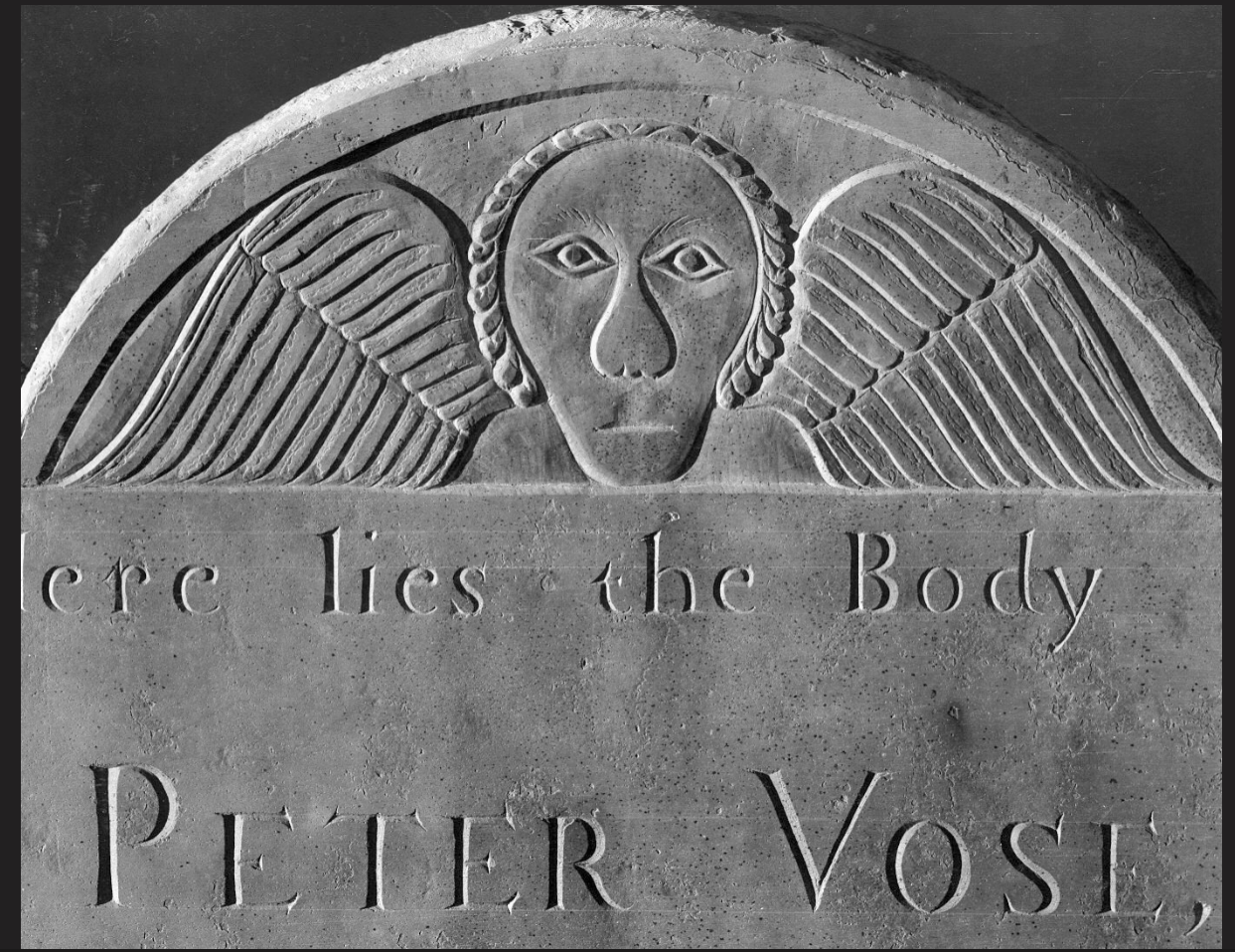
James Foster I (1651–1732), son of Captain Hopestill Foster and Mary Bates, is credited with creating many of the oldest tombstones in the Boston area. His legacy continued through his sons—James Foster II (1698–1763), and Hopestill Foster (d. 1676)—as well as his grandson, James Foster III (1732–1771.)
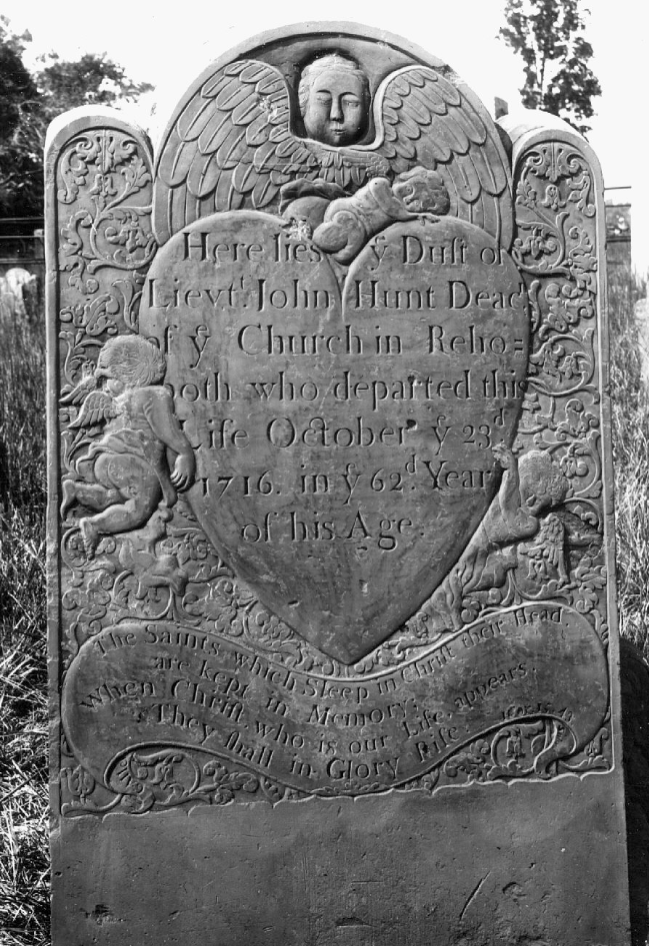
George Allen Sr. was described as a “New England Master of Gravestone Carving.” Allen lived and worked in Rehoboth, Massachusetts and is buried in the Newman Cemetery about a mile south of where he lived. Many of his carvings featured friendly faces with sweeping wings–quite similar to the John Stevens Shop of Newport, Rhode Island. Allen’s son Gabriel and George Jr. continued the business after his death.
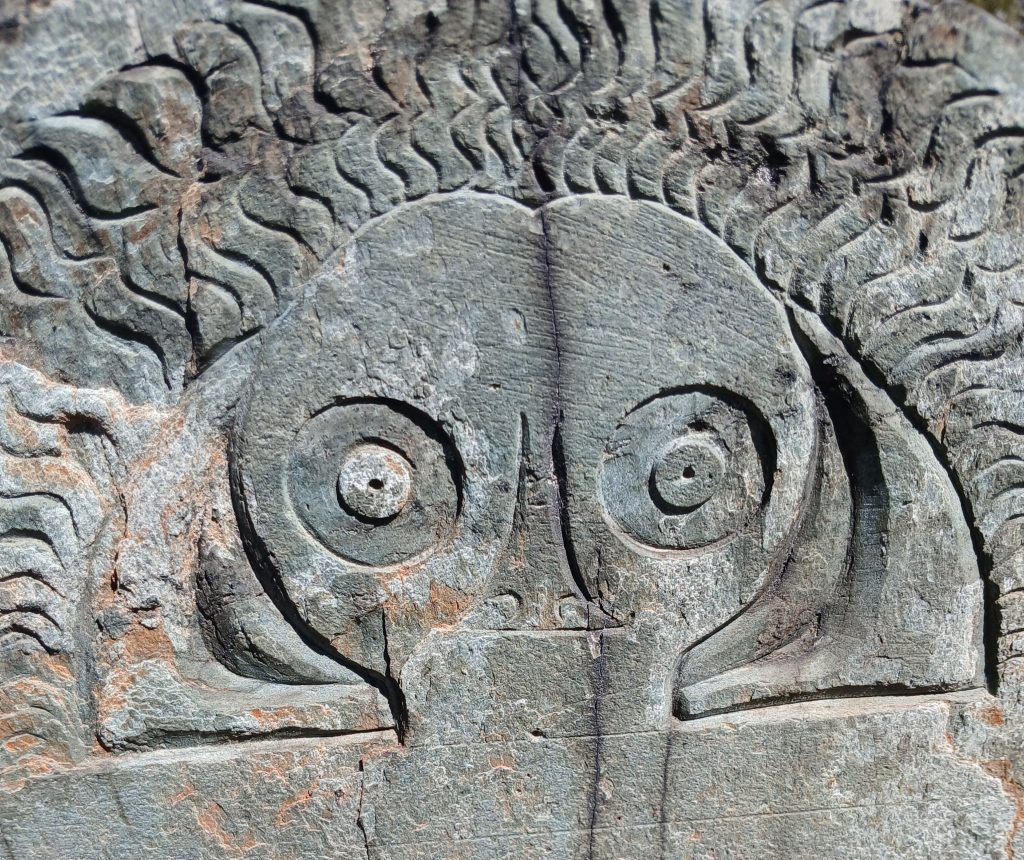
The Soule family of stonecutters left behind some of the most distinctive imagery in New England’s 18th and early 19th century graveyards. Their “Medusa stones,” carved with round faces with wild hair, are instantly recognizable on headstones across Massachusetts.
Sources:
Timothy B. Riordan, The Stonecutter of Boston: An examination of his work and an hypothesis concerning his identity, Markers XXXIV: (2018), 86-98.
Allen Ludwig, “Graven Images – New England Stonecarving and Its Symbols, 1650-1815,” 134.
David Watters, “The JN Carver.” Markers: Annual Journal of the Association for Gravestone Studies, vol. 2, 1983, p. 115-131. Project MUSE, https://dx.doi.org/10.1353/mrk.1983.a957179.
Harriette Forbes, Old Time New England, Volume VX, July 1924-April 1925, page 147 (Boston: 1925)
Harriet Forbes, Gravestones of Early New England and the Men Who Made Them
James Blachowicz, From Slate to Marble, 72-75.